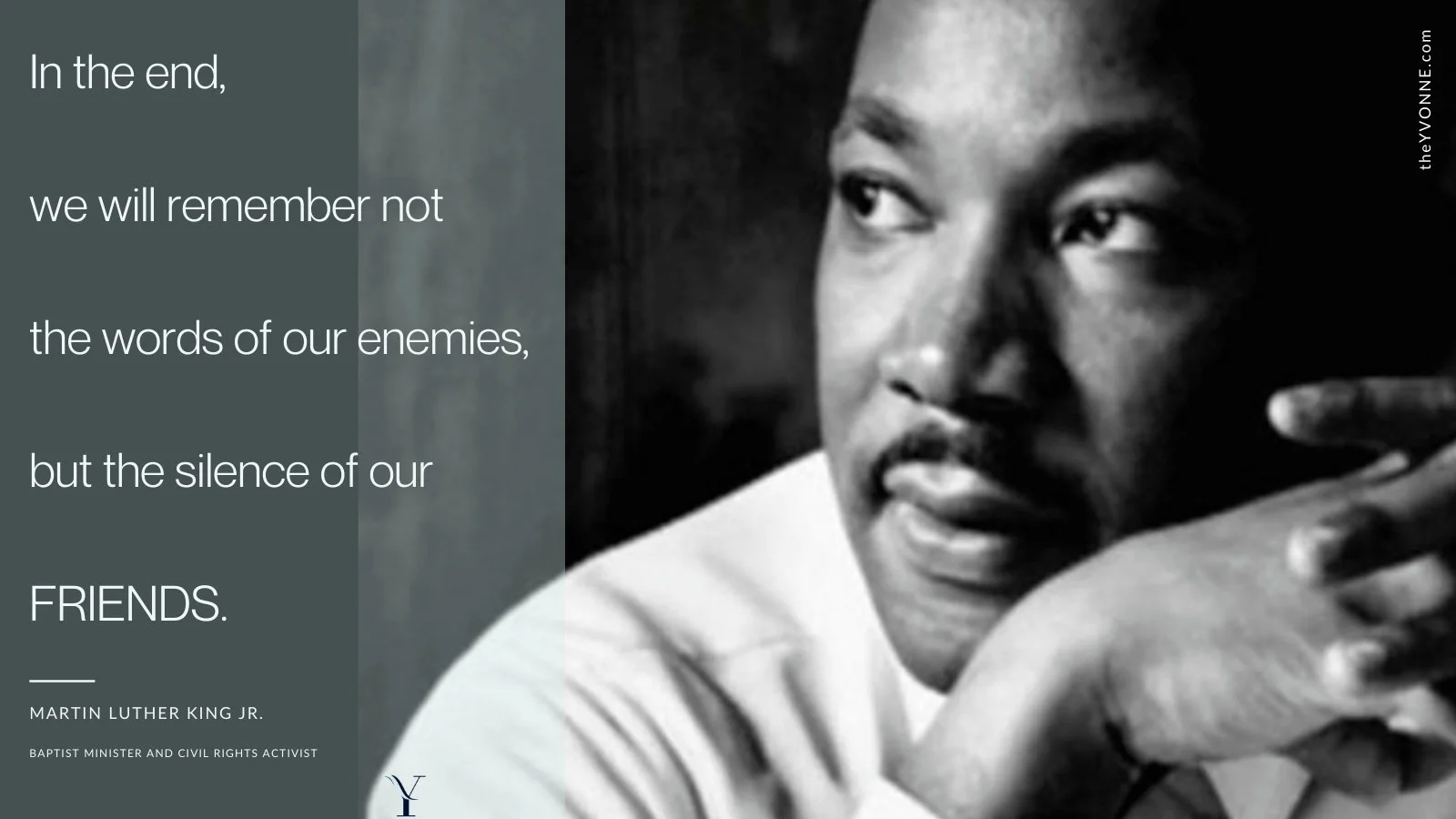
"In the end, we will not remember the words of our enemies but the silence of our FRIENDS. " - Martin Luther King Jr
"In the end, we will not remember the words of our enemies but the silence of our FRIENDS." said Reverend Martin Luther King Jr, which is still relevant today as when he first uttered this truth. Do you standup?
Those working in data analytics or visualization can be a friend to all those who are a minority by ensuring our work is inclusive. The Do No Harm Checklist by the Urban Institute with the support of the Tableau Foundation and Links below focus on Racial Equality Awareness in Data Visualization, which Rev Martin Luther King Jr. championed. The items in the Do No Harm checklist can be a guidepost for inclusivity for all minority groups. They are simple questions to ask yourself to ensure that all appreciate your work and does not hurt anyone. I recommend downloading the checklist and adding it to your workflow.
What is the Do No Harm Checklist?
The Do No Harm Checklist was developed by the Urban Institute with support from the Tableau Foundation. It is a practical set of questions designed to help data practitioners examine whether their visualizations and analyses could inadvertently harm, exclude, or misrepresent minority groups.
The checklist covers areas including: how data is collected and who may be missing from it, whether labels and categories reinforce harmful stereotypes, whether color choices or visual hierarchies imply value judgments about groups of people, and whether the framing of findings could be used to justify discrimination.
These are not abstract ethical questions. They are design decisions that every analyst makes, usually without realizing it. The checklist makes them explicit and actionable.
How to use it:
Download the checklist and work through it before finalizing any visualization that involves data about people, especially data involving race, gender, income, health, or geography. It takes less than 10 minutes and often surfaces issues that would otherwise go unnoticed until after publication. Resource: Do No Harm Guide — Urban Institute and Tableau Foundation
The Do No Harm checklist work is supported by the Tableau Foundation, which means there is a great visualization hub of top-level work that can inspire and educate.
What do you think? Let me know - Contact Me
References:
Related Post You Might Enjoy