Reading time: 39 secs
Ever have a tweet stick with you after 24 hours? That is what happened to me last night after reading a tweet from Dr. Brandeis Marshall (@csdoctorsister). The writer summarized the critical question one should focus on when doing a data project or any project. Why are you doing the project? Why are you investing your time?
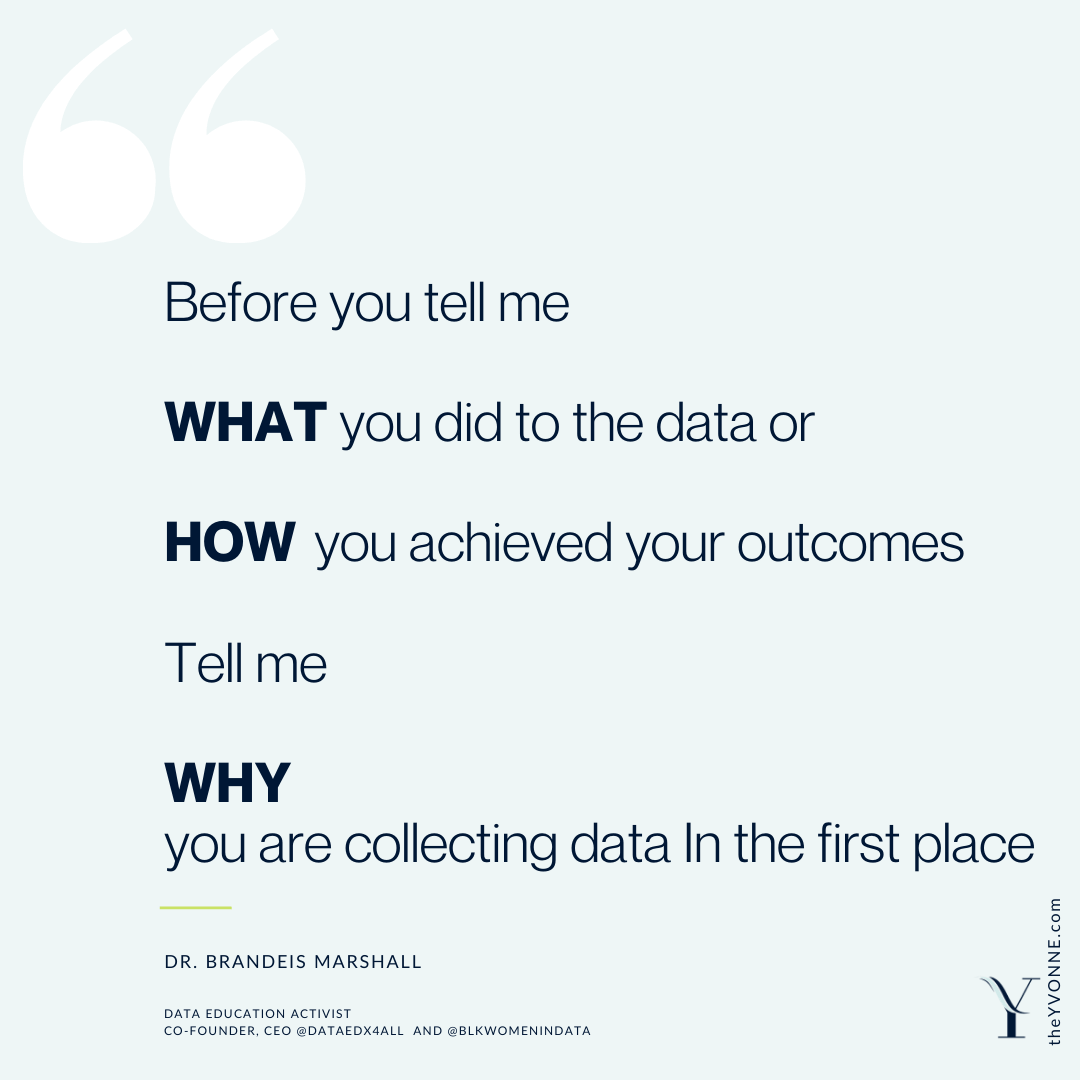
“Before you tell me WHAT you did to the data or
HOW you achieved your outcomes tell me
WHY you are collecting the data in the first place”
I realized when I read her tweet I was doing this already. For example, with each viz challenge I do, I create a text file containing the goal for the project. Upon completing the viz, I write up the blog post; I compare my reason for doing the final result. I do this for all projects, big or minor projects. Dr. Marshall tweet made me realize the importance of not only for me to know why I am working on a project, I really do need to share that information. It is given me motivation to keep up writing my summaries, even I may be the only one reading them for now. Thank you Dr. Marshall for the extra motivation!
What Happens When You Skip The Why
Most data projects that go wrong do not fail because of technical errors. They fail because the analyst started building before they were clear on the purpose. You can build a technically perfect dashboard that answers a question nobody was asking. You can spend two weeks cleaning a dataset only to find that the actual decision had already been made. You can visualize data beautifully and still communicate nothing useful.
All of these outcomes share a common root: the why was not established before the work began.
What The Why Question Actually Asks
Asking why before starting a project forces you to identify the decision or action that the analysis is meant to support. Not the data you have, not the tool you want to use, not the chart type you find interesting. The decision. Once you know what decision the work is serving, everything else, what data you need, what level of granularity matters, what the audience actually cares about, becomes much easier to determine.
How To Apply It
Before starting any analysis, write one sentence in plain language: "The purpose of this project is to help [who] decide [what]." If you cannot write that sentence yet, you are not ready to start building. Go back and have the conversation with your stakeholder, or if it is a personal project, with yourself.
This constraint feels limiting at first. It is actually liberating. It tells you what to include, what to leave out, and when you are done.
This one tweet by Dr. Brandeis Marshall (@csdoctorsister) provides the road map to a successful project. Why are you doing the project, then what did you do, and how did you do it. Since this is such a valuable lesson, I turned the quote into a Twitter and Instagram image post.
What do you think? Let me know - Contact Me
Post Image For Instagram
Post Image For Twitter:

Related Post You Might Enjoy